Last updated November 22, 2026
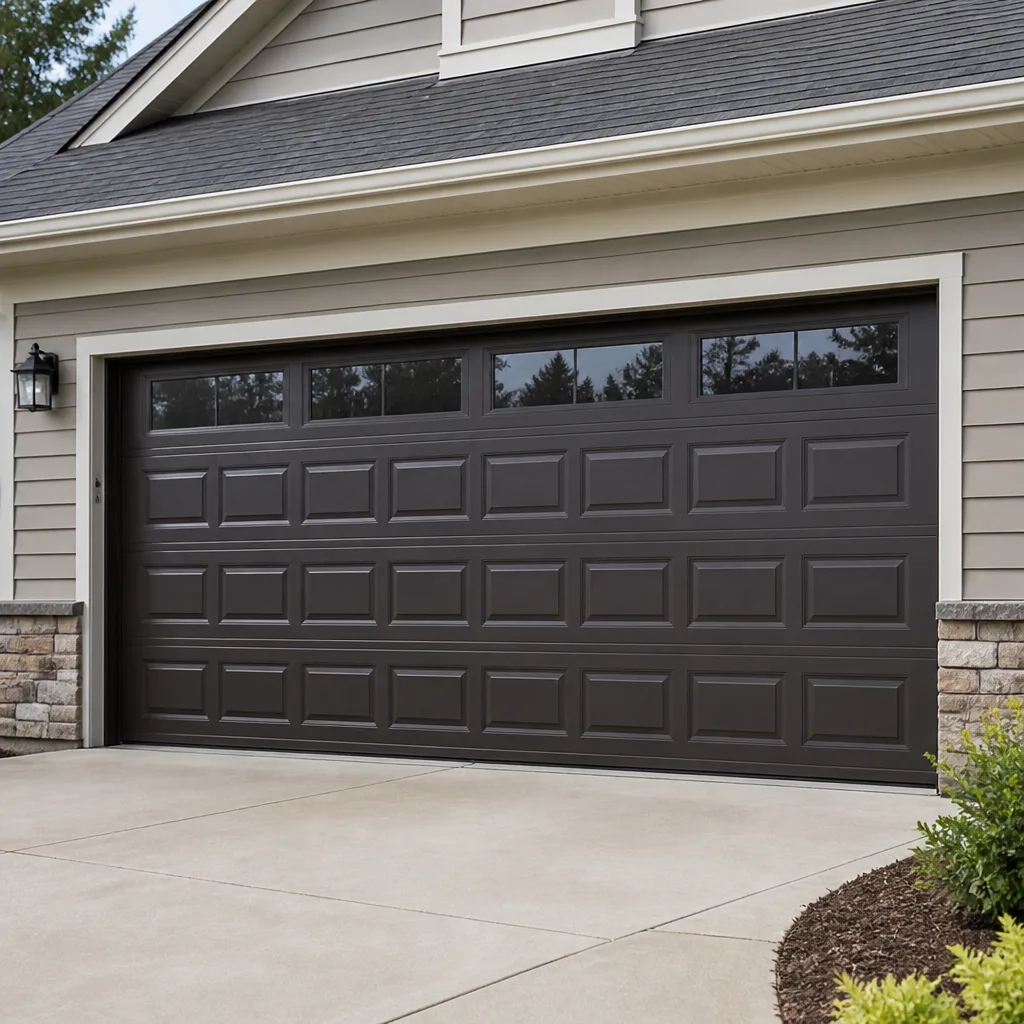 Raised-panel steel
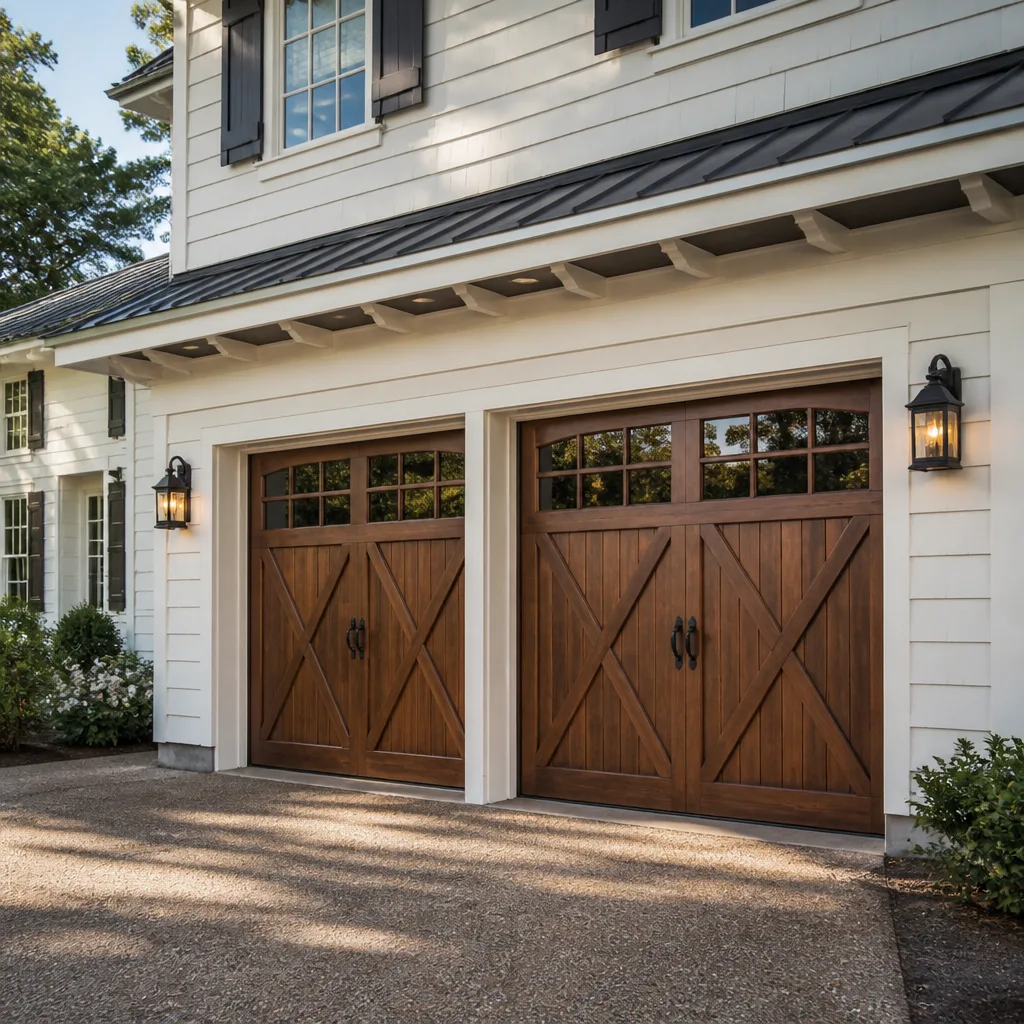 Carriage house
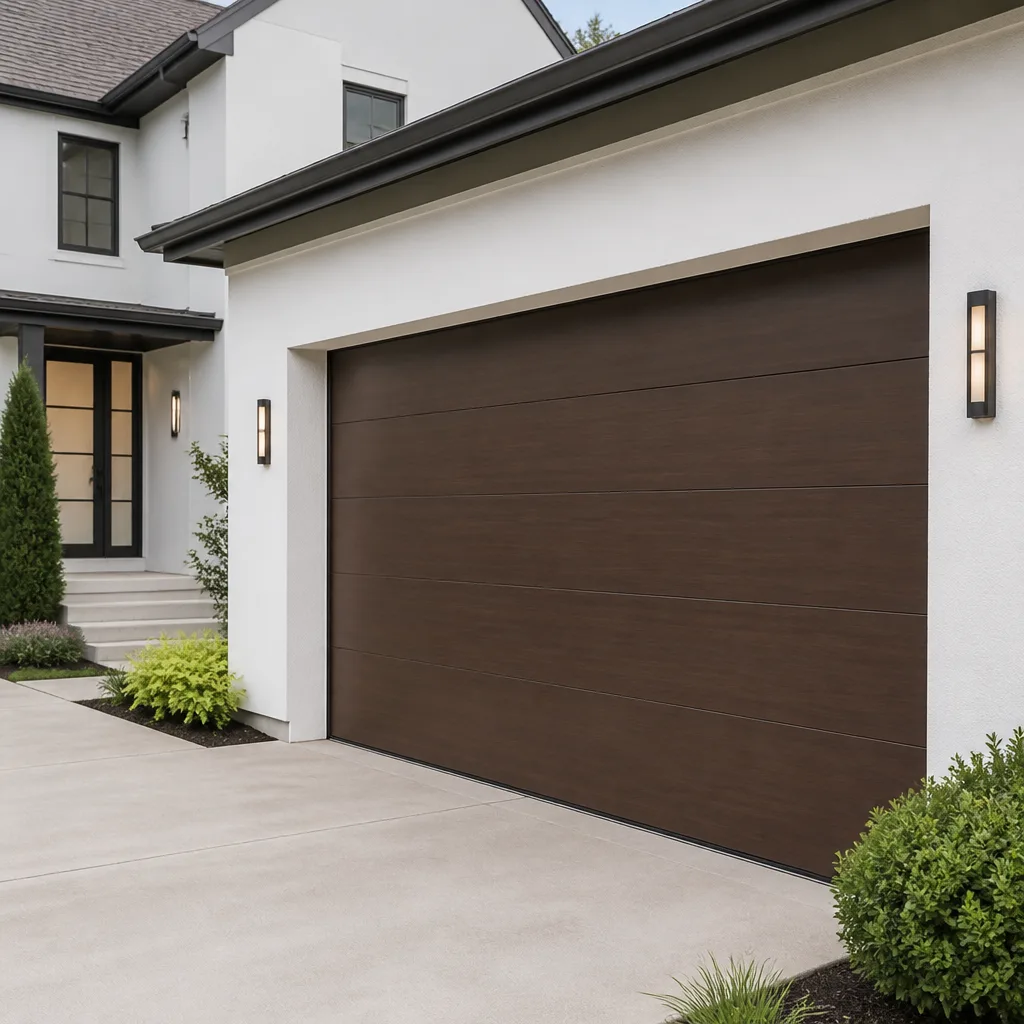 Modern flush
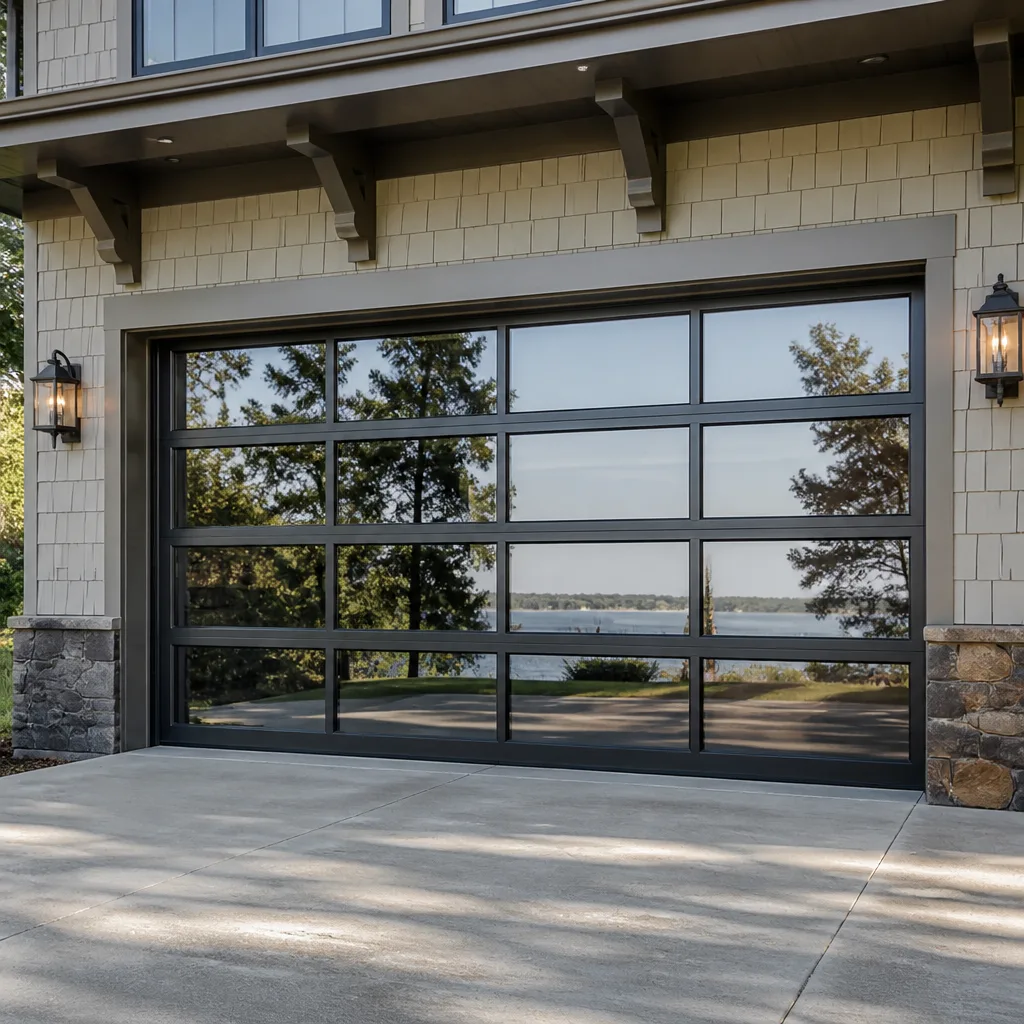 Full-view glass
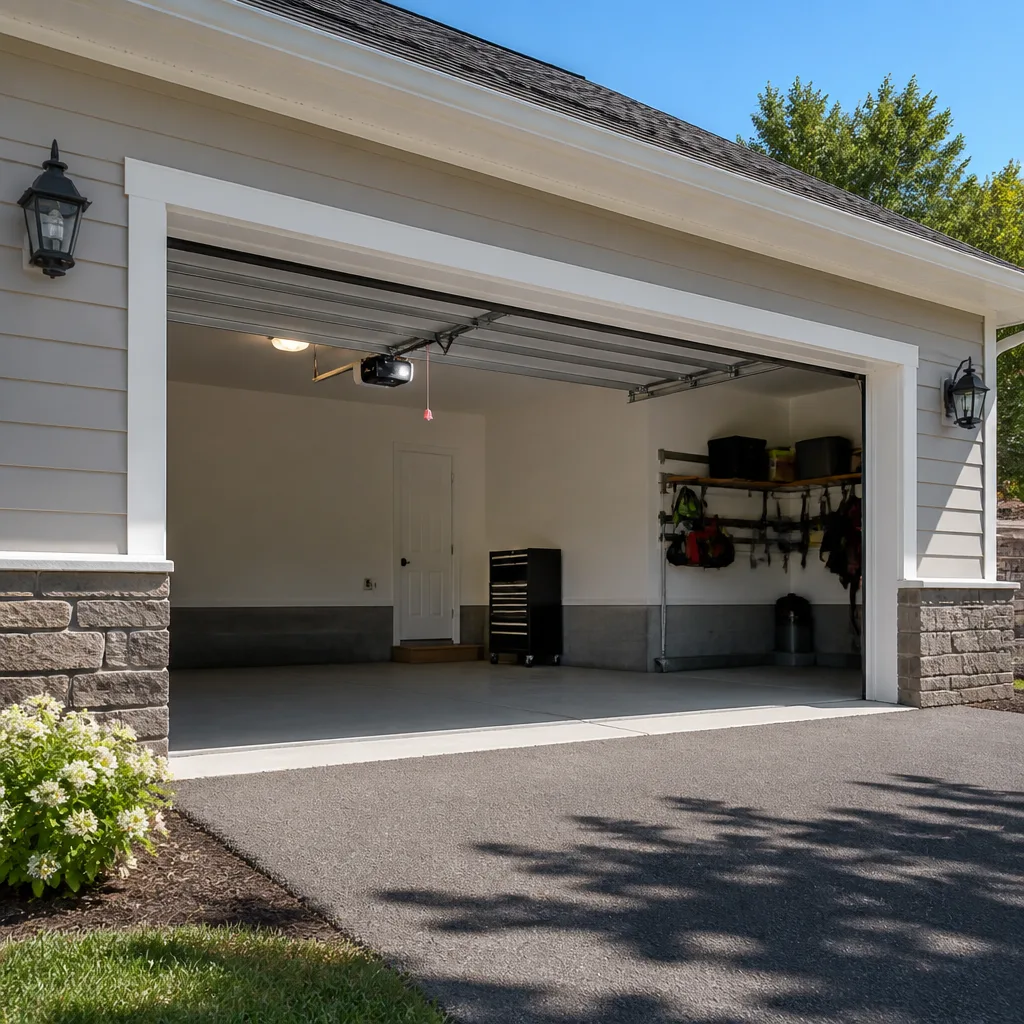 LiftMaster openers
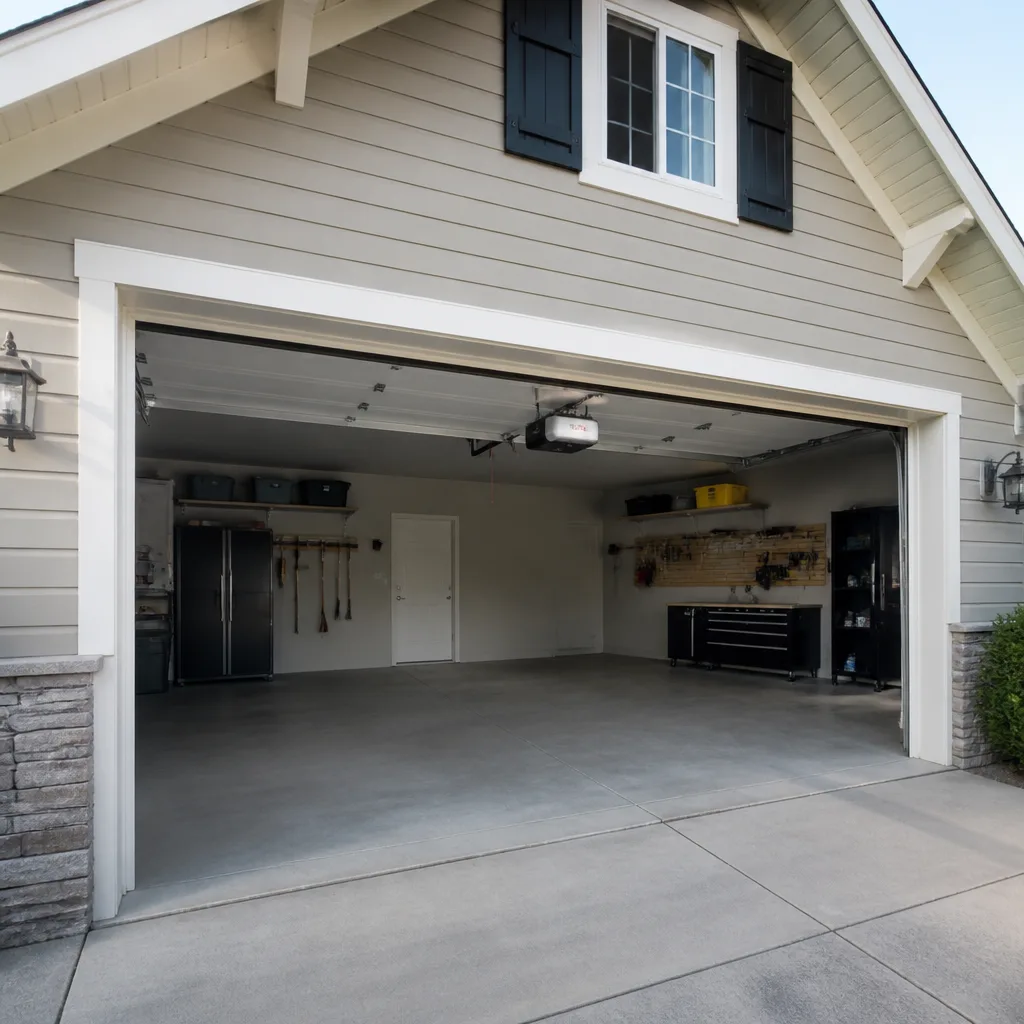 Chamberlain openers
Full 25-point door and opener safety check with every visit - springs, cables, rollers, tracks, and your LiftMaster or Chamberlain opener included
You get a price before we start. It does not change when the pro arrives.
Get your free estimateDIY vs Professional Garage Door: The New Tampa Homeowner’s Decision Guide
Garage door spring replacement isn’t dangerous because homeowners are incompetent. It’s dangerous because torsion springs store enough energy to cause serious injury regardless of who is handling them, and most tutorials leave that part out. The same gap runs through the whole DIY-versus-professional question. Some garage door tasks really are owner-safe. Others aren’t about skill at all. In this guide we walk through New Tampa homes task by task, show where DIY saves real money and where it quietly costs more, and explain the Florida paperwork problem that most decision guides never mention.
Quick Answer
In New Tampa, most garage door adjustments and maintenance are safe for a careful homeowner, but spring, cable, and high-tension work belongs to a trained specialist. The dividing line isn’t confidence or YouTube familiarity; it’s stored mechanical energy and, on Florida doors, wind-load documentation that a DIY repair can leave incomplete.
Styles & brands we work with
- Raised-panel steel
- Carriage house
- Modern flush
- Full-view glass
- LiftMaster openers
- Chamberlain openers
Table of Contents
- Why This Decision Is Different in New Tampa
- Task-by-Task: What’s Owner-Safe and What Isn’t
- The Florida Wind-Load Rule Most DIY Guides Skip
- DIY vs Professional: Where the Money Actually Goes
- The Tasks That Look Simple and Cause Injuries
- When Calling a Specialist Is Simply Faster
- How New Tampa’s Heat and Humidity Age Your Door
- Two Rules That Keep Every DIY Task Safe
Why This Decision Is Different in New Tampa
Most DIY-versus-professional articles treat garage doors as a generic household system. That framing breaks down here. New Tampa homes are largely newer construction with double-car doors on tight lots, hurricane-rated panels, and openers built around LiftMaster or Chamberlain logic boards. The doors are heavier than older single-car units, the panels are engineered rather than bolted together, and the openers carry electronics that don’t respond to a generic aftermarket part.
The neighborhood matters too. Whether you’re in Tampa Palms, Arbor Greene, Hunter’s Green, or Westchase, you’re working on a door that was installed to a specific wind rating rather than a standard panel. That’s good news for storm resilience and a real complication for DIY repairs, because any change to hardware or structure affects the documentation your home insurance carrier may rely on.
We specialize in garage doors only. That focus is why we can tell you, task by task, where a homeowner should stop and where a job is genuinely manageable. Our technicians have up to 8 years of experience and know the quirks of Craftsman and Raynor hardware as well as the more familiar LiftMaster and Chamberlain openers.
What You’ll Learn
- Which tasks you can do without a specialist and which are high-tension physics problems
- How a DIY spring or panel repair can leave wind-load documentation incomplete
- Where DIY genuinely saves money and where it creates callbacks
- Which jobs look simple but send homeowners to urgent care
- When a specialist is simply faster because the parts are already on hand
Task-by-Task: What’s Owner-Safe and What Isn’t
This is the core of the guide. We list every common garage door task and place it in one of three buckets: owner-safe, specialist, or never attempt.
Owner-Safe Tasks
- Lubricating the tracks and hinges. A silicone spray on hinges and a light coat on the rollers keeps a New Tampa door quieter in the heat.
- Testing the safety reverse. Place a board in the door’s path and confirm the door reverses on contact.
- Balancing the manual force. With the opener disconnected, lift the door halfway. It should hold and lower smoothly.
- Cleaning and inspecting the tracks. Wipe debris and check for dents. Realigning a bent track is a specialist job.
- Replacing opener remote batteries and reprogramming remotes. Standard homeowner maintenance.
- Tightening visible nuts and bolts on the hardware. Finger-check what you can reach without force.
Specialist Tasks
- Torsion and extension spring replacement. High-tension work. Not owner-safe.
- Cable replacement. Cables carry the same stored energy as springs.
- Panel replacement on a wind-rated door. The panel must match the original rating.
- Opener motor or logic board replacement. Brand-specific electronics and safety sensors.
- Roller and track replacement. Requires the door to be safely supported and the tension relieved.
- Full door replacement. Measuring, permitting, and installation.
Never Attempt
- Loosening or cutting a torsion spring without winding bars and the correct training
- Removing bottom brackets while cables are under tension
- Working under a door propped open without a locking pin and backup support
The line we draw is mechanical energy, not difficulty. A homeowner can tighten a bolt with confidence. A homeowner can’t safely handle a spring storing enough force to break a wrist. That’s why garage door repair in this trade reserves spring work for trained technicians.
The Florida Wind-Load Rule Most DIY Guides Skip
Florida garage doors are engineered systems, and that changes the DIY calculus. A wind-rated door, and the structural attachment around it, is installed to meet a building code requirement specific to the property. When the door is repaired or replaced with mismatched hardware, the paperwork that demonstrates the original installation may no longer line up with what’s actually on the door.
Why that matters: many Florida homeowners’ insurance policies and wind mitigation reports reference the door’s rated performance. If a DIY repair swaps a rated component for a generic one, that documentation can become incomplete, and some carriers will flag it during a claim review. We aren’t here to overstate the risk; most minor repairs don’t affect it at all. But spring anchors, panel brackets, and structural attachments do.
The safe path is simple. Before any repair that touches a wind-rated component, call your city’s building department and ask whether your specific change requires a permit or documentation. Then decide. That one call takes five minutes and prevents an expensive surprise months later.
What Counts as a Wind-Rated Component
- The door panels themselves
- Spring anchor plates and mounting brackets
- Bottom brackets and lift cables
- Track anchoring and reinforcement struts
- Any structural attachment to the wall or header
If the task you’re considering touches one of those, it’s a specialist job for both safety and documentation reasons. Cosmetic and maintenance tasks are unaffected.
DIY vs Professional: Where the Money Actually Goes
Here’s where this guide gets honest. DIY saves real money on some tasks and costs more on others. The difference is whether the task can be done once correctly or whether it creates a callback.
Typical Cost Ranges in New Tampa
These are typical estimated ranges. A written estimate from the local pro sets the final price.
- Spring replacement, one spring: $180 – $340 typical. A matched pair is usually replaced together, so a pair costs roughly twice that.
- Opener repair, motor or logic board: $150 – $320 typical, depending on brand
- Track and roller replacement: $120 – $300 typical
- Panel replacement: $250 – $650 typical, higher for a wind-rated panel
- Full door installation: measured and quoted per job after a free in-home measure
Where DIY Saves Real Money
- Routine lubrication and cleaning. Zero specialist input needed.
- Remote replacement and reprogramming. Standard homeowner work.
- Visible bolt tightening. A wrench, fifteen minutes, done.
- Safety reverse testing. A board and a minute of your time.
Where DIY Costs More Than the Specialist
- Spring replacement. The spring itself is the cheapest part. If you guess the wire gauge or wind count wrong, the door is unbalanced, the opener overworks, and you’re back to square one with a specialist call on top.
- Opener board swaps. A wrong logic board on a Chamberlain or LiftMaster that isn’t the exact model match can brick the unit. That’s two repairs instead of one.
- Panel mismatch. A generic panel on a wind-rated door creates documentation problems that cost more than the panel ever did.
- Track realignment. Overcorrecting a bend usually cracks the roller bracket and forces a full replacement.
One advantage we hold that a homeowner can’t replicate: parts inventory. The company sells garage door parts and keeps brand-specific hardware on hand, so a repair that would take you two trips to a hardware store and a week of waiting on a shipping order often completes in a single visit. In the New Tampa market, where a broken door means a security gap on a family home, that day matters.
The Tasks That Look Simple and Cause Injuries
This isn’t a scare section. It’s a risk calculus. Some garage door tasks cause injuries not because homeowners are careless but because the physics is invisible.
Spring Replacement
A torsion spring on a double-car door stores enough energy to cause a serious injury. The spring doesn’t care whether the person handling it has watched six videos. The correct tool, the correct winding bars, and the correct technique for the exact wire gauge matter more than confidence does. Extension springs on older doors carry similar risk and add the danger of the safety cable snapping free if it wasn’t installed properly.
Bottom Bracket and Cable Work
The bottom bracket holds the cable under tension. Loosen the wrong bolt and the bracket can release in a fraction of a second. This is a task that looks mechanical and simple, and it’s one of the most dangerous on the whole door.
Working Under a Propped Door
A door held open by a single prop, with the opener disconnected, is a door that can fall. Always use a locking pin and a backup support, and never stand under a door held only by hand.
Adjusting Spring Tension Without a Gauge
Homeowners sometimes “tweak” a spring to level the door. Even a quarter turn in the wrong direction can load the spring beyond its rating. This is a specialist calibration, not a feel-it-out job.
The right response to these risks isn’t fear. It’s accuracy. Springs are dangerous; leave them to a specialist. Everything else on the door has a clear owner-safe or specialist answer, and most homeowners only ever need the specialist for the high-tension jobs.
When Calling a Specialist Is Simply Faster
Sometimes the question isn’t “can I do this” but “how long will this take.” That’s where DIY quietly loses. The part is available from the specialist in a single visit. The homeowner has to identify the exact part, order it, wait, and install it without instructions.
Typical DIY Timeline
- Diagnose the failure (often wrong on a first attempt)
- Identify the exact brand and model (Craftsman, Raynor, LiftMaster, Chamberlain all differ)
- Search for the part online or drive to a hardware store
- Wait for shipping if the part is brand-specific
- Install it without a proper manual
- Discover the diagnosis was wrong and start over
Typical Specialist Timeline
- Call and describe the symptom
- Get a free estimate and a scheduled visit
- Technician arrives with brand-specific parts on hand
- Diagnosis confirmed on site
- Repair completed with the price agreed before work starts
Our technicians work on your brand, and that’s why this timeline holds in New Tampa. Multi-brand familiarity across Craftsman and Raynor, alongside LiftMaster and Chamberlain openers, means the diagnosis happens on the visit rather than after a part order. If your opener quits on a Sunday, you can reach us that day; we’re closed Saturday, then back open Sunday through Friday, 7am to 7pm for garage door opener repair.
How New Tampa’s Heat and Humidity Age Your Door
New Tampa’s mild winters and hot, humid summers give garage doors a specific wear pattern. The heat expands and contracts metal panels and track, which loosens bolts over time. Humidity works on the hinges and rollers, where steel contacts steel and lubrication disappears faster than in dry climates.
What this means for DIY decisions: routine lubrication and bolt checks matter more here than they would in a drier part of the country, and they’re entirely owner-safe. A squeaking door in Arbor Greene or Tampa Palms is often a lubrication problem, not a mechanical failure. Before calling for a repair, apply silicone spray to the hinges, check the rollers, and run the safety reverse test. If the door still misbehaves, it’s a specialist call.
Newer New Tampa homes with LiftMaster openers sometimes show logic board problems after a summer of heavy duty cycles. Those aren’t owner-safe fixes because the electronics are model-specific and a mismatch can brick the unit.
Two Rules That Keep Every DIY Task Safe
We keep the DIY-vs-professional line simple, and these two rules cover it.
- Never loosen anything under tension. Springs, cables, and bottom brackets all store energy. If a fastener is holding back a loaded component, stop.
- Never stand under a door that isn’t locked or supported. Once the opener is disconnected, a door can drop without warning.
Everything else, from lubrication to safety reverse testing, is fair game for a careful homeowner. Set a reminder to check the door once a season. Small owner-safe maintenance prevents most of the specialist calls we see.
Common Mistakes to Avoid
- Buying a generic spring to save money. A spring that doesn’t match the door’s weight and lift height wears out fast and can unbalance the opener. Get the exact size, or leave it to a specialist who carries the right inventory.
- Skipping the Florida wind-load check. In New Tampa, any repair that touches a wind-rated component should start with a call to the city’s building department. Ask before you touch it, not after.
- Overtightening track bolts. Snug is enough. Over-tightening cracks the anchor plate and forces a replacement you didn’t need.
- Using WD-40 or grease on the tracks. Solvent sprays strip the existing lubrication. Grease attracts grit, and in New Tampa’s humidity it gums up. Silicone spray is the right choice.
- Disconnecting the opener and forgetting the door’s weight. A manual door on a spring that’s near failure is a falling hazard. Test it with a propped door, never overhead.
- Assuming the opener is dead when the sensor is the problem. Safety sensors and their wiring fail far more often than motors do, and that’s a check a homeowner can safely run.
- Ignoring a single snapped spring. On a two-spring door, one spring failing means the other is working double duty. Replace the matched pair together.
See the difference
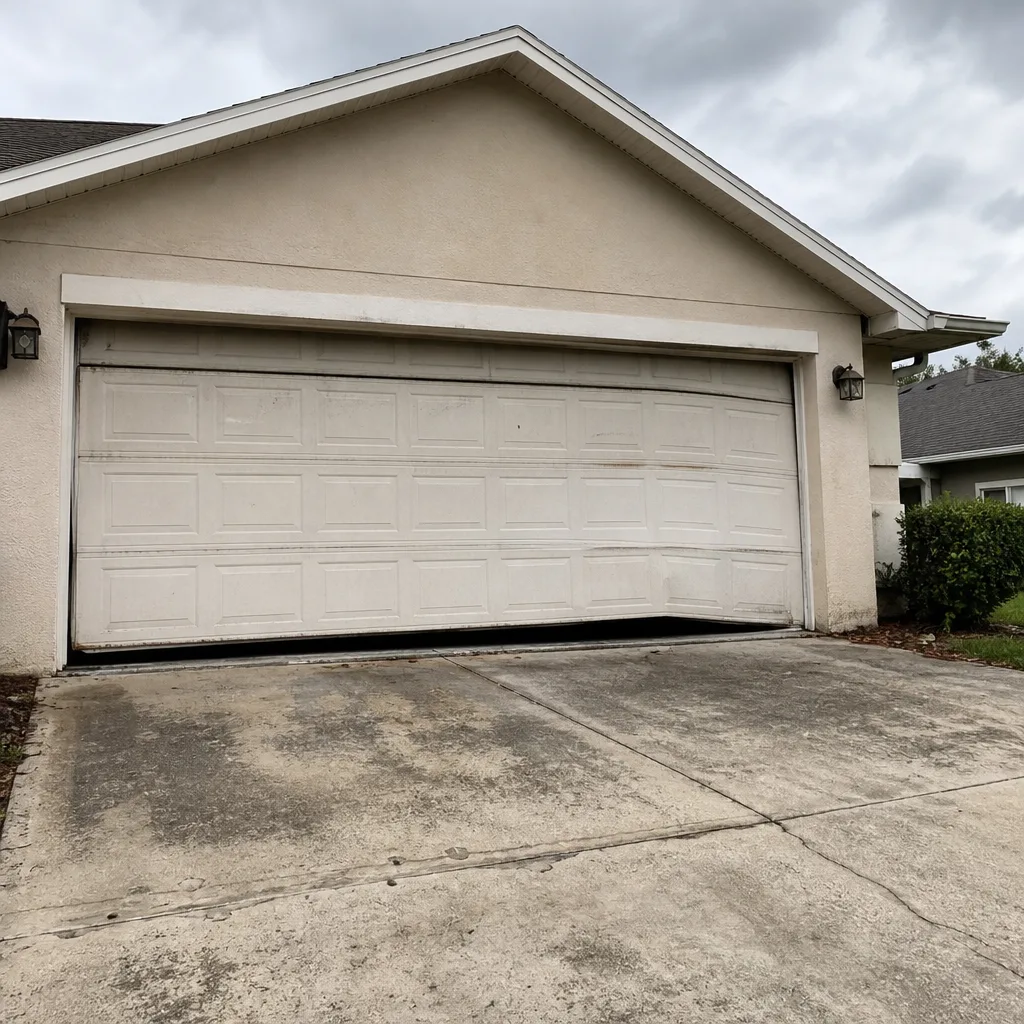 Before
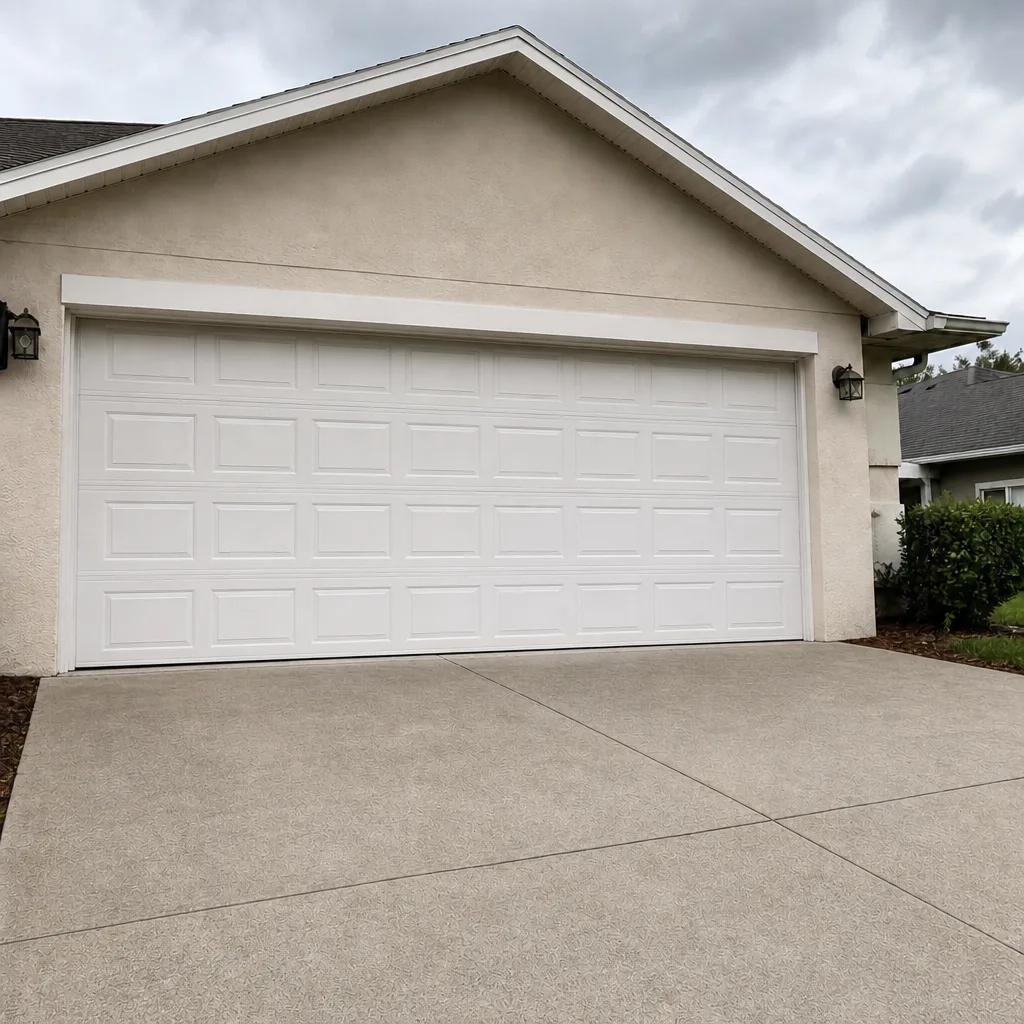 After
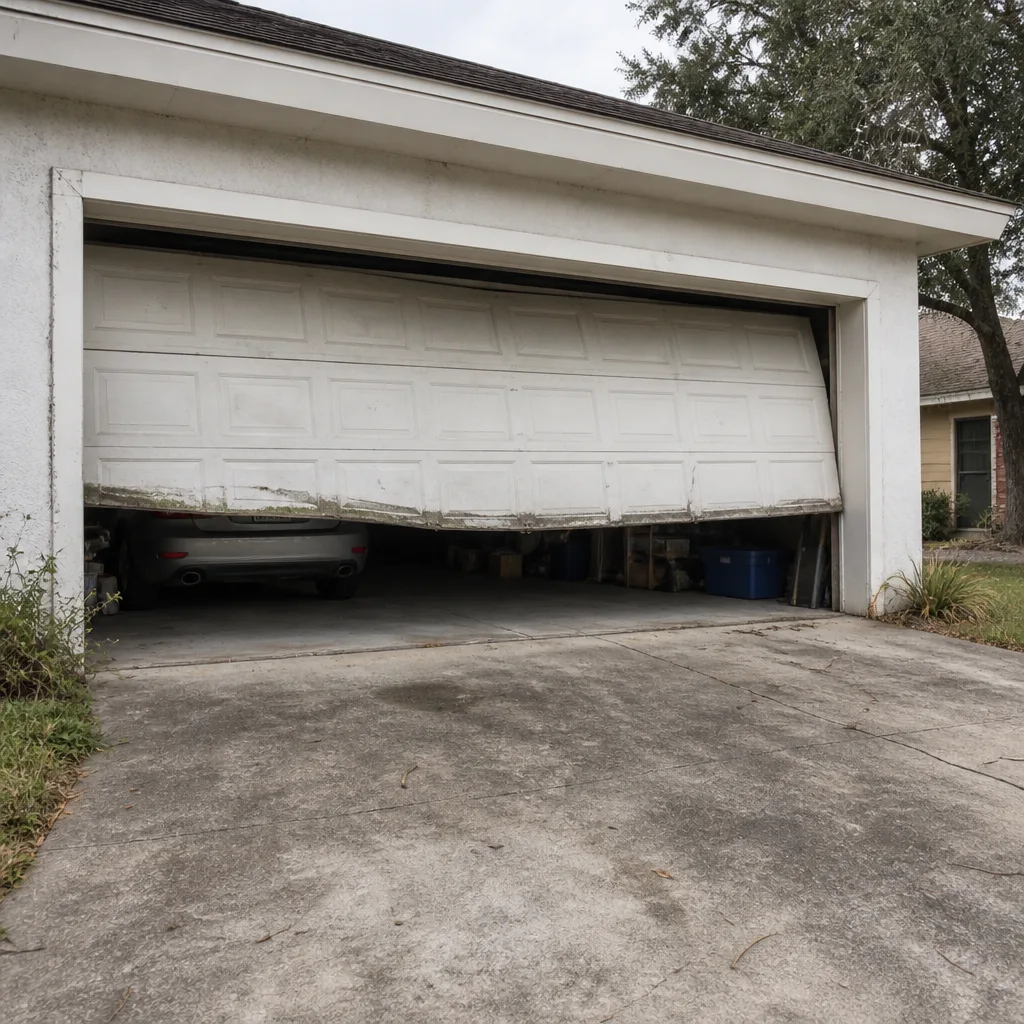 Before
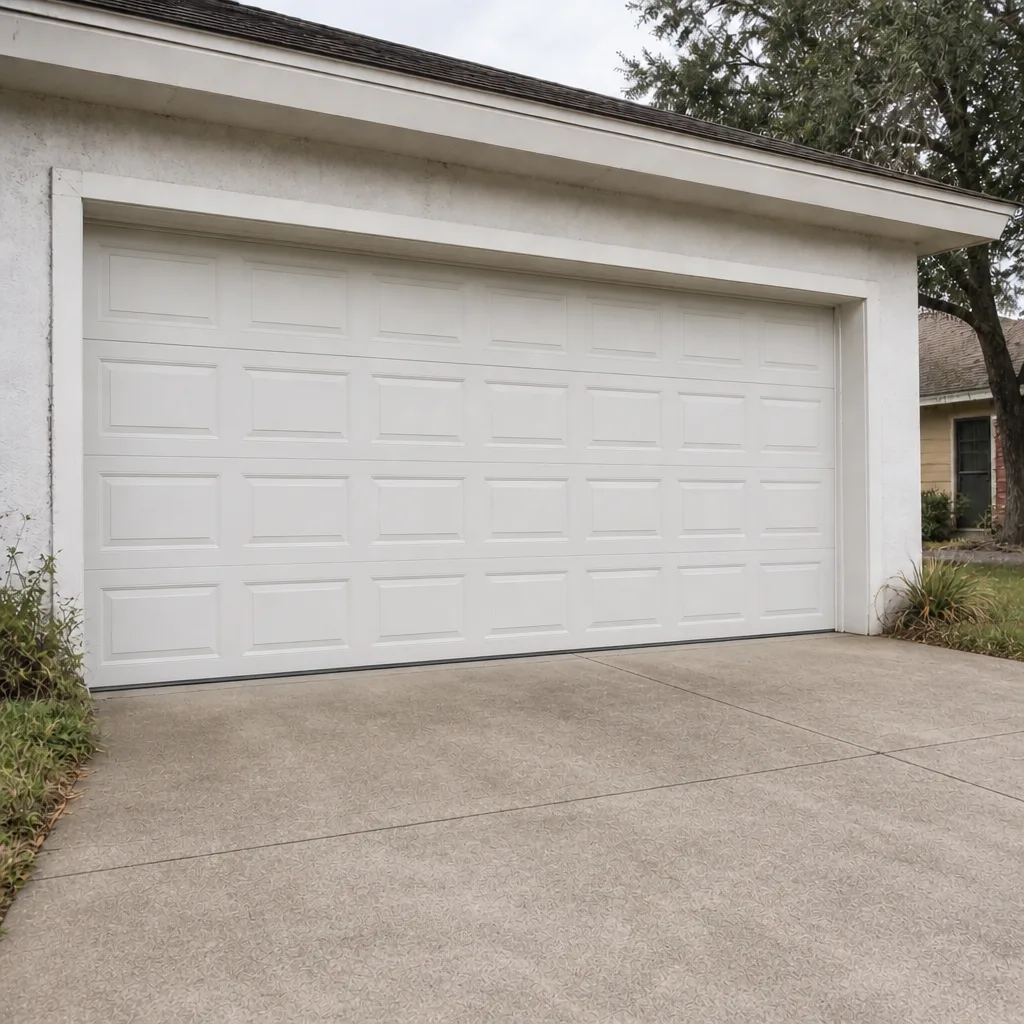 After
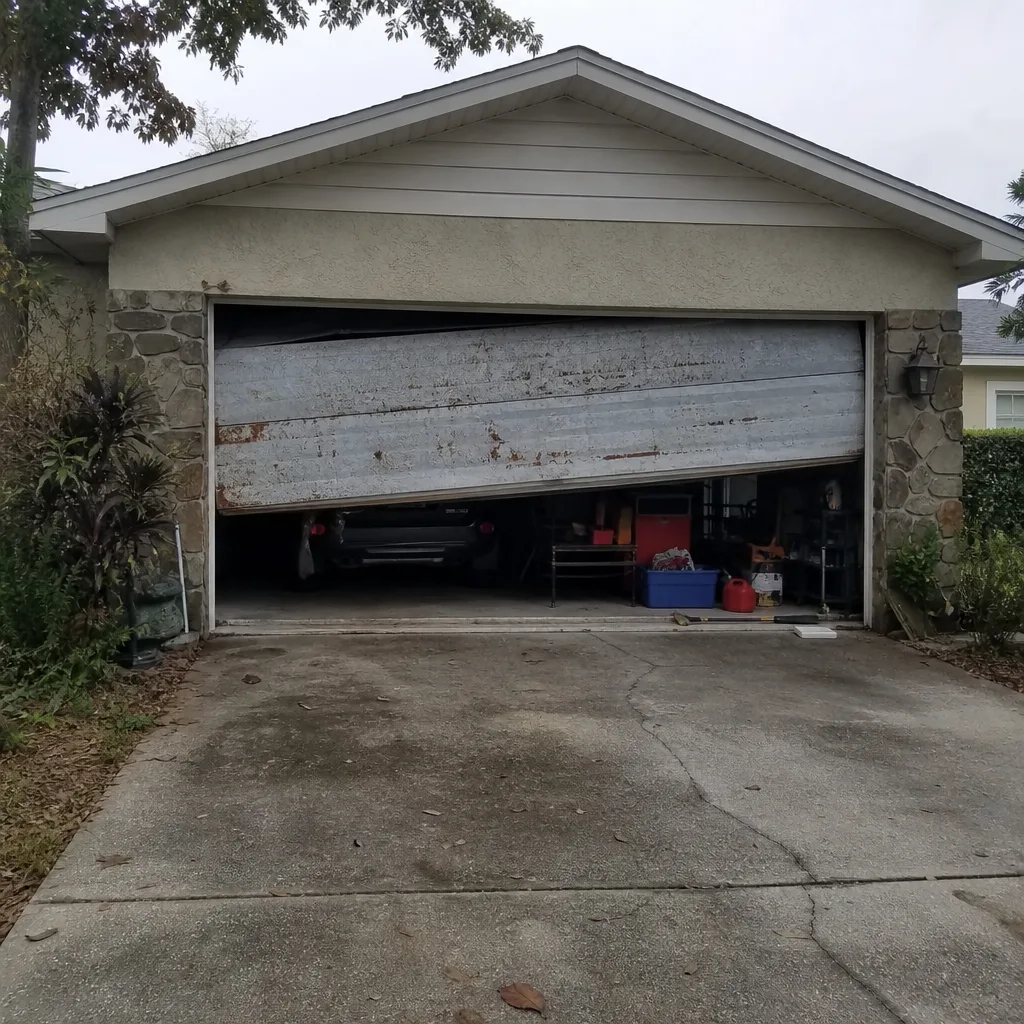 Before
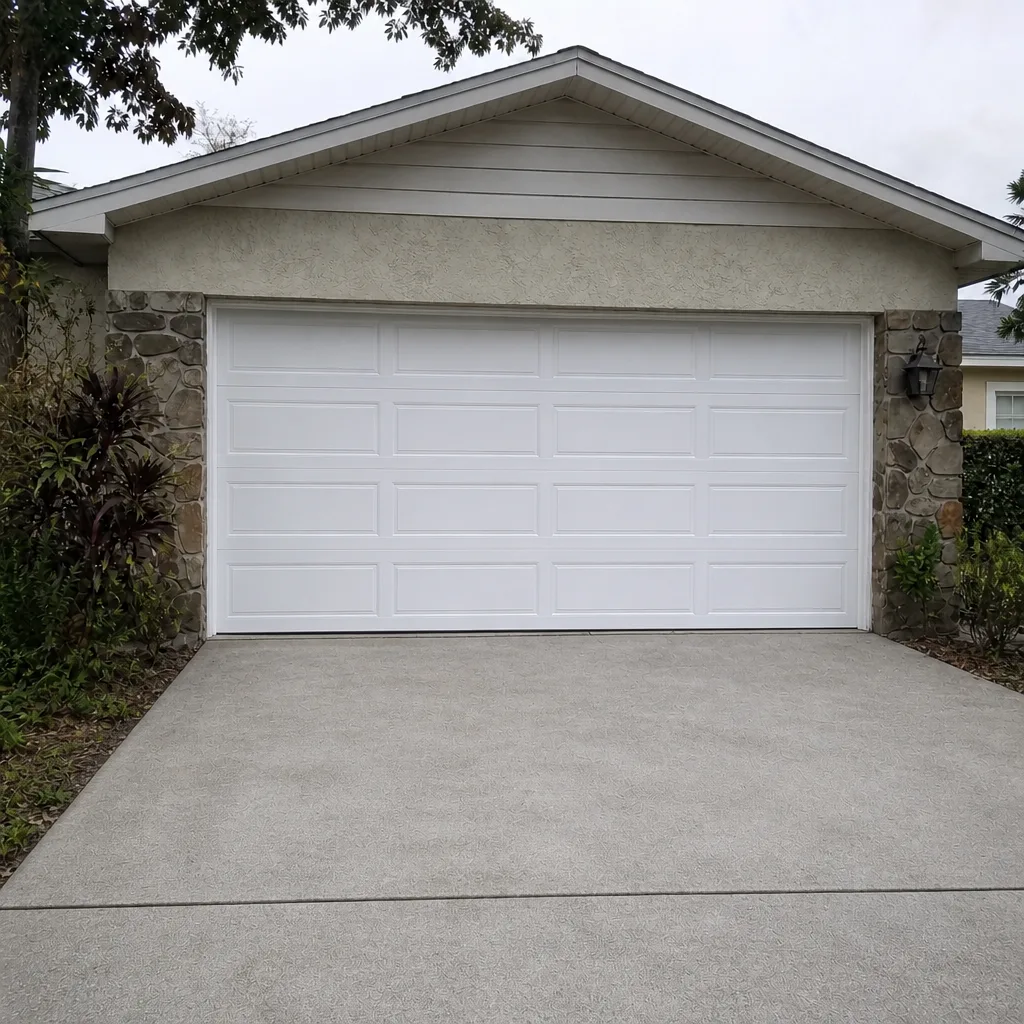 After
When to Call a Professional
Call a specialist the moment the job touches a spring, a cable, a bottom bracket, a wind-rated component, or the opener’s logic board. Call if the door is uneven, if the opener runs but the door doesn’t move, if you hear a loud snap, or if you’re unsure which of those you’re facing. Our technicians have up to 8 years of experience with eight leading door and opener brands, and the price is quoted before any work starts. Garage Door Repair New Tampa offers free estimates in New Tampa – call (844) 443-4770. Get the answer today, not after a part order arrives.
Frequently Asked Questions
No. A torsion or extension spring stores enough energy to cause serious injury regardless of a homeowner’s skill, so spring replacement belongs with a trained specialist. Call (844) 443-4770 for a free estimate; the price is agreed before work starts.
We’re closed Saturday, and we’re open Sunday through Friday, 7am to 7pm. If your door fails on a Saturday, you can leave a message and we’ll schedule you for Sunday. Call (844) 443-4770 to schedule.
It can, specifically when a repair touches a wind-rated component like panels, spring anchors, or bottom brackets. Before any such repair, ask your city’s building department whether a permit or documentation is required. If you’re unsure, call (844) 443-4770 for a free estimate.
No. We quote and agree on the price before any work starts, and that written estimate sets the final amount. Call (844) 443-4770 for an exact quote; estimates are free.
Yes. The local pro we connect you with is licensed and insured as their state requires. Call (844) 443-4770 to schedule a free estimate.
Our technicians are fluent in eight major brands, including LiftMaster, Chamberlain, Clopay, Amarr, Wayne Dalton, Craftsman, Raynor, and Genie. Whatever brand is on your door, we know it. Call (844) 443-4770 for a free estimate.
The Bottom Line
The DIY-versus-professional question has a simple spine once you see the risks laid out. Owner-safe tasks are adjustments, lubrication, safety checks, and remotes. Specialist tasks are anything holding stored mechanical energy or wind-rated structure. The New Tampa wrinkle is the wind-load documentation that many DIY guides ignore, and that’s why a five-minute call to your city’s building department is worth more than a week of research. Our technicians have up to 8 years of experience and know the quirks of your specific system. From a broken spring to a brand-new door, one call covers it. Call (844) 443-4770 for a free estimate in New Tampa.
Written by the team at Garage Door Repair New Tampa.