Last updated November 22, 2026
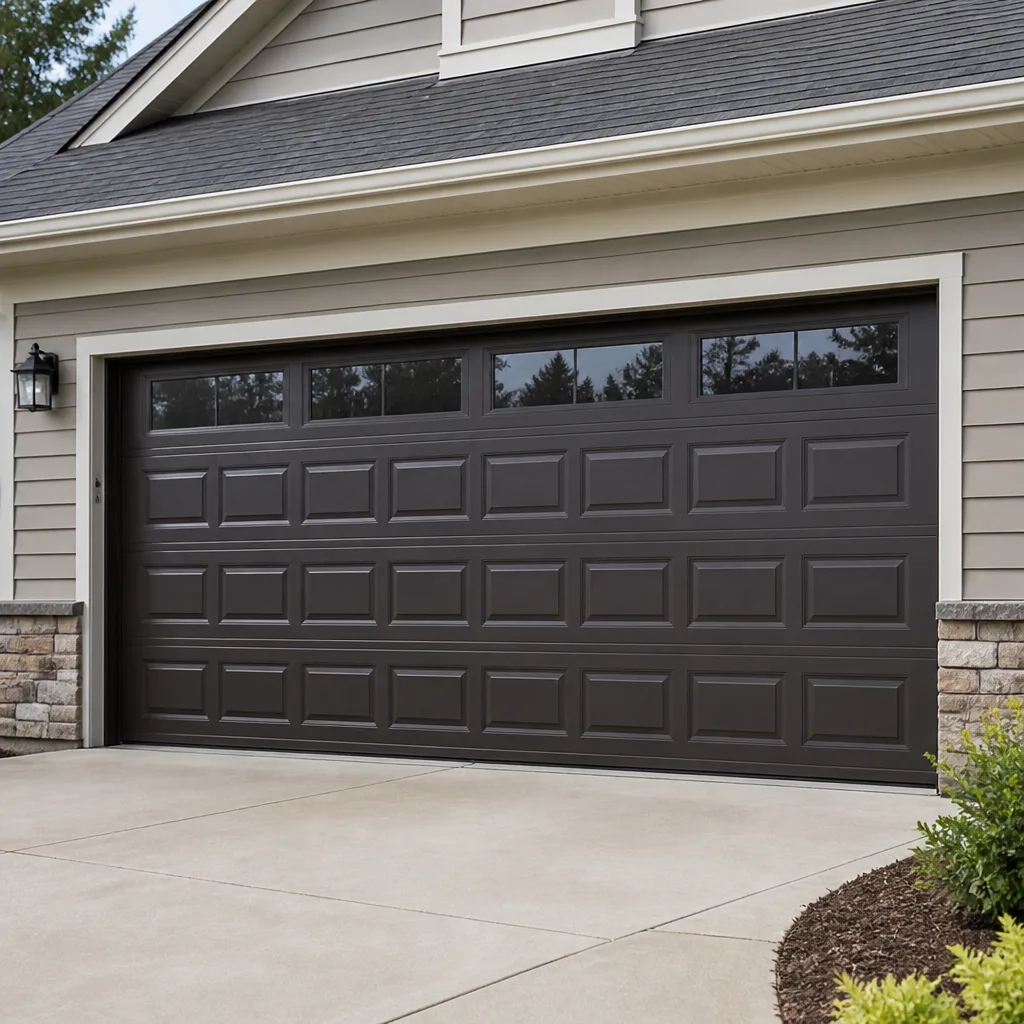 Raised-panel steel
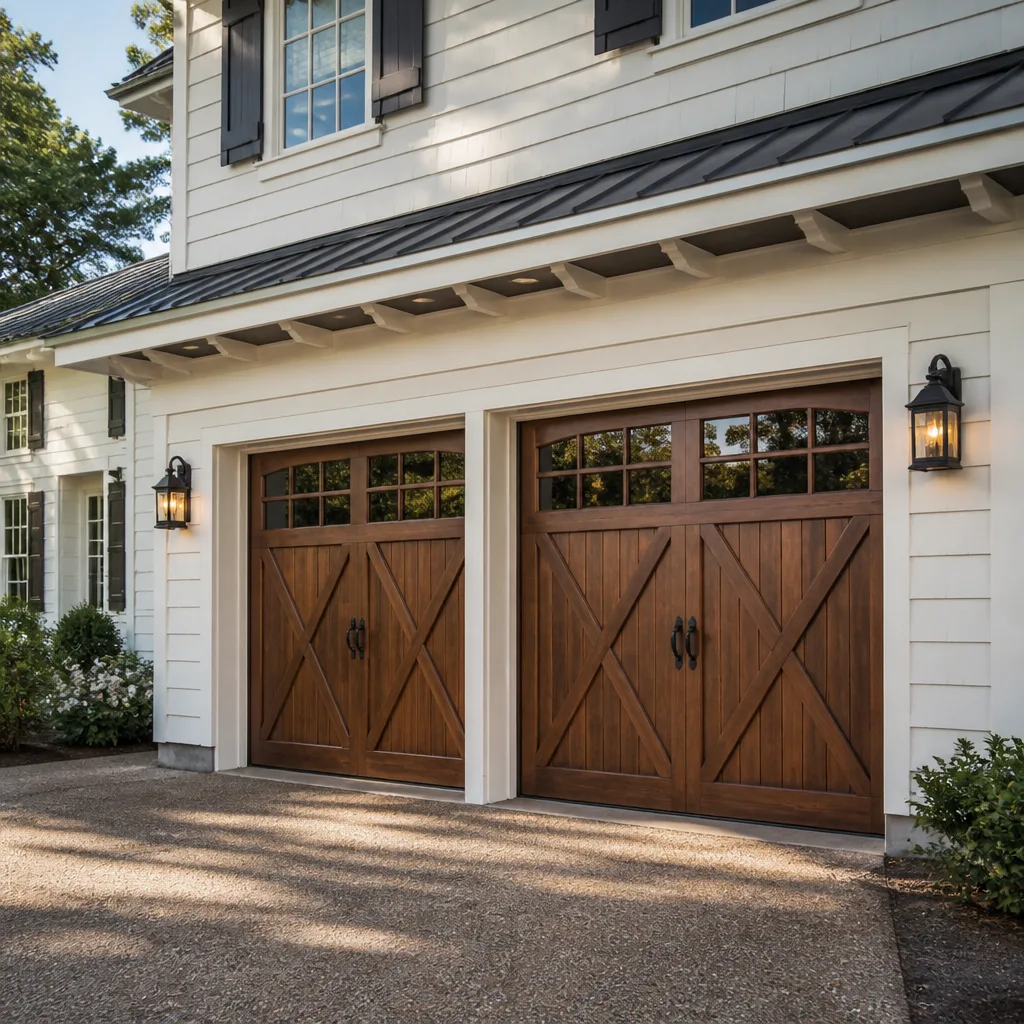 Carriage house
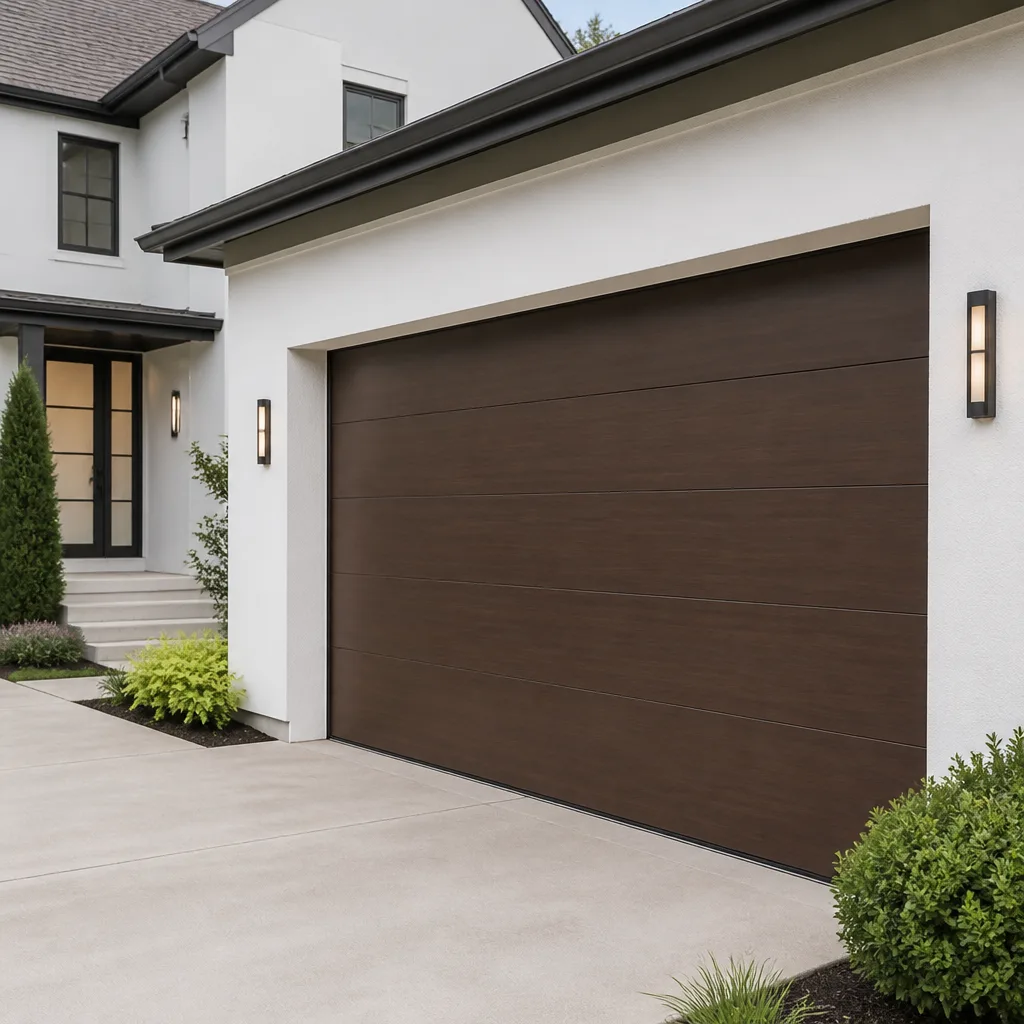 Modern flush
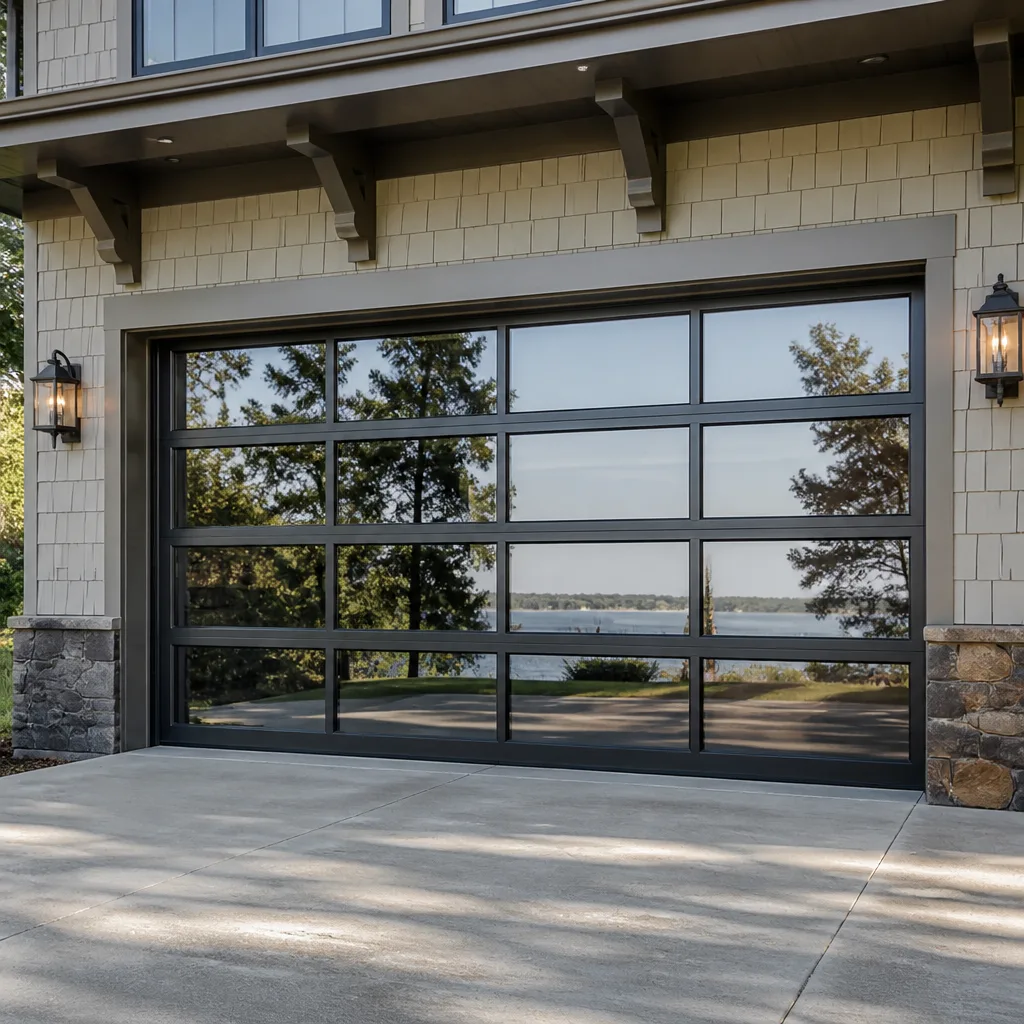 Full-view glass
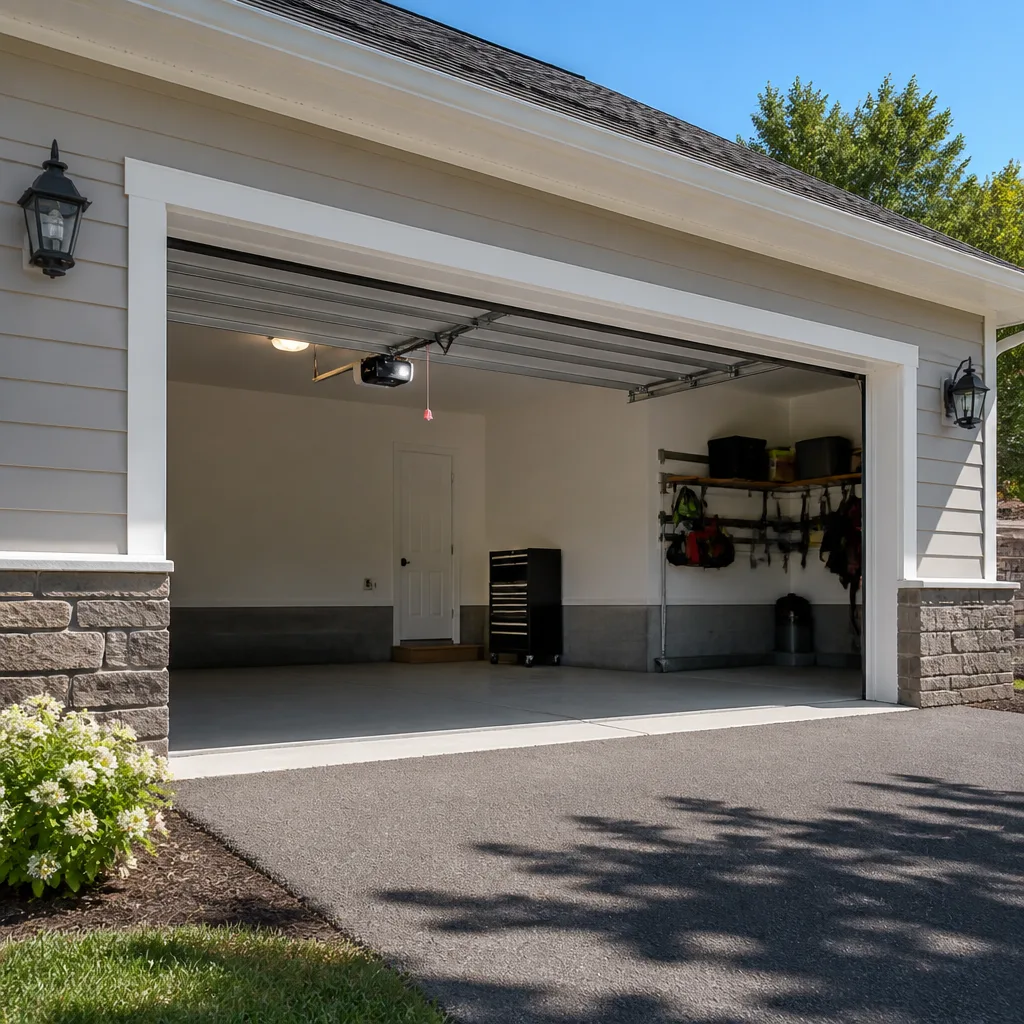 LiftMaster openers
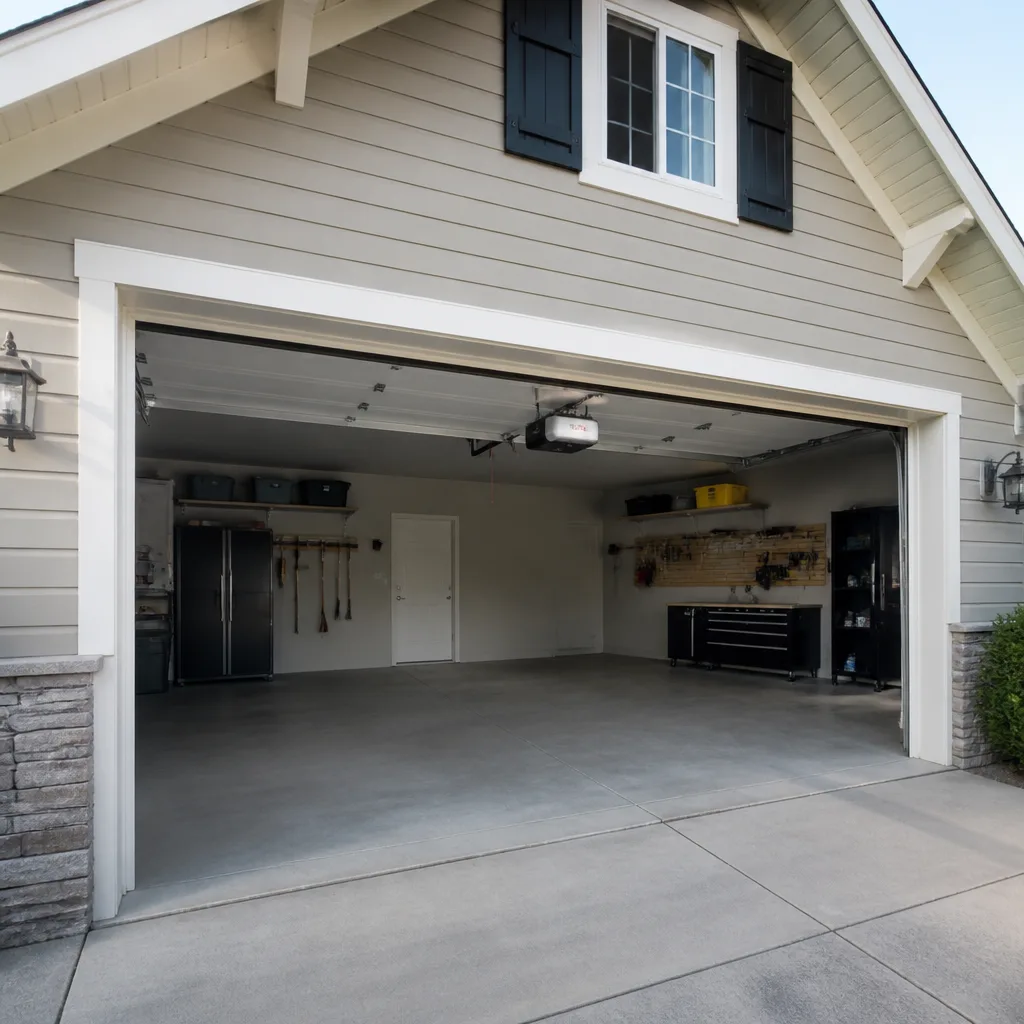 Chamberlain openers
Full 25-point door and opener safety check with every visit - springs, cables, rollers, tracks, and your LiftMaster or Chamberlain opener included
You get a price before we start. It does not change when the pro arrives.
Get your free estimateGarage Door Warning Signs: A New Tampa Homeowner’s Reference Guide
A garage door that hesitates for two seconds before it moves isn’t a minor annoyance. In Florida humidity, that hesitation is often a spring that’s starting to seize, and a partially seized spring doesn’t stay partial forever. It fails completely, and it tends to pick a morning when your car is inside and you’re already late. Most warning sign guides list the obvious stuff: the door won’t open, the door is loud. This one covers the early signals New Tampa homeowners dismiss for months before an expensive failure. You’ll learn what humidity does to springs and cables, how Tampa Bay heat strains your opener, and which seal and panel problems are cosmetic versus structural.
Quick Answer
The most important garage door warning signs in New Tampa are a door that hesitates before moving, a grinding or scraping sound during travel, an opener that strains in afternoon heat, visible rust or dark dust on the springs and cables, and daylight showing under the bottom section. Any of these means the door needs a professional look before it stops working entirely. Humidity and heat cause most of these early failures here, and they show up months before the door actually breaks.
Styles & brands we work with
- Raised-panel steel
- Carriage house
- Modern flush
- Full-view glass
- LiftMaster openers
- Chamberlain openers
Table of Contents
- Why New Tampa Doors Fail Differently
- The Spring Corrosion Puzzle: Reading Rust Before It Breaks
- Three Opener Behaviors That Mean Motor Strain
- Weather Seal Decay: Cosmetic vs. Structural
- Cable Fraying: What You Can Safely Observe
- Panel Warping and Bottom-Section Gaps
- What Every Sound Is Telling You
- A Simple Seasonal Check for New Tampa Homes
Why New Tampa Doors Fail Differently
Garage door wear is usually taught as a northern problem: cold snaps, salted roads, freeze damage. New Tampa has the opposite climate, and it wears doors in the opposite way. Winters here are mild, so the cycle that matters is the long humid season. A garage in New Tampa may sit in warm, moist air for most of the year, with the interior of the space a few degrees different from the outside and humidity collecting against every metal part.
That combination matters because steel, oil, and moisture don’t stay separate. The oil that should keep a torsion spring lubricated gets thinned and washed, and moisture finds the steel underneath. Springs and cables start to corrode from the surface inward. Meanwhile, the same daytime heat that makes a Tampa Bay afternoon feel like a wall of warm air puts a slow, repeated load on your opener motor and its capacitors.
So the early warning signs here rarely look like a dramatic failure. They look like a door that’s a bit stiff, an opener that’s a bit louder, a seal that’s a bit curled. In our experience, that’s the three-to-six-month window. New Tampa doors spend it slowly getting worse, and then one day the spring gives out or the opener quits. Catching the small stuff early is what changes the outcome.
The Spring Corrosion Puzzle: Reading Rust Before It Breaks
Before a torsion or extension spring snaps, it almost always shows rust first. Springs are under constant high tension, and every bit of surface corrosion removes steel from a part that’s already loaded. In Florida humidity, the corrosion timeline is faster than in a dry climate, and it starts in places most homeowners never look.
Here’s what to check, using only your eyes and a flashlight:
- Look at the springs above the door. A healthy torsion spring is usually a uniform dark color with a light film of oil. Orange or brown flaking on the coil, especially where the coil bends, is a warning. Flaking rust means pitting underneath.
- Look at the mounting area. Rust streaks on the brackets, the center plate, or the wall around the spring anchor point suggest moisture is sitting there, which usually means the spring is corroding too.
- Listen for a creaking, grinding, or “singing” sound when the door moves. That sound is metal sliding on metal with little or no lubrication, and it often means a spring is beginning to bind.
- Check for hesitation. If the door pauses at the very start of its travel and then lurches into motion, the spring isn’t doing its share of the lifting, and the opener is struggling to compensate.
A torsion or extension spring is a genuinely dangerous part. It’s under enough stored energy to injure someone badly, and if it’s already corroding, an inexperienced attempt to touch or adjust it is exactly the wrong move. We handle spring repair directly for that reason: it’s a safety-critical job, and it’s one many generalists won’t touch. If you see rust or hear creaking, call a specialist and leave it alone.
Three Opener Behaviors That Mean Motor Strain
An opener that struggles is not the same as an opener that’s failing, but in Tampa Bay heat the first often becomes the second. Heat is hard on opener motors, capacitors, and circuit boards, and a garage here can get very warm in the middle of the day. A door that works fine every morning and strains every afternoon is telling you something.
Watch for these three behaviors:
- Stalling or slowing in afternoon heat. The motor needs more current to do the same work, and a worn capacitor or a straining gear assembly won’t deliver it. If the door is slower or gives a softer start after a hot day than on a cool morning, the opener is working too hard.
- Rattling or grinding from the head unit under the ceiling. That’s often a worn gear or a chain or belt that’s out of adjustment. It gets louder before it locks up.
- Reversing partway through travel, or needing two presses of the remote. A partial reversal usually means the motor is tripping its own internal force limit; a remote that only works up close means a weak signal, often a failing logic board or a battery on its way out.
We work on the common opener brands, including LiftMaster, Chamberlain, and Genie, and the pattern is consistent across them: motor strain shows up as small quirks first. Our garage door opener repair covers the head unit itself, so a struggling opener can often be fixed rather than replaced. If you’re hearing any of the three behaviors above, get it looked at before the opener fails with your car inside.
Weather Seal Decay: Cosmetic vs. Structural
The rubber seal along the bottom of the door is the most-replaced part on a garage in New Tampa, but many homeowners swap it for cosmetic reasons when the real problem is a structural draft. The distinction matters because the seal is what keeps humid air and debris out of your garage, and it sits close to the ground where humidity is heaviest.
Sort it by what you see:
- Cosmetic: the seal is cracked, faded, or a bit flattened, but it still sits flush on the floor when the door is closed. That’s appearance, and swapping it is a simple fix.
- Structural: the seal is curled upward, torn away from its retainer, or has a visible gap under it when the door is down. That gap lets warm, moist air into the garage, which raises humidity inside, which accelerates corrosion on every metal part.
The same logic applies to the side and top seals and the retainer the bottom seal slides into. A curled or gapped seal near the floor level is where Florida humidity does the most damage over time. If you can see daylight under the door, or a ribbon of light at the corners, it needs attention. And once the seal is gapped, the bottom of the door itself is more exposed, which leads to the panel issue we’ll get to.
Cable Fraying: What You Can Safely Observe
A fraying cable is one of the clearest warnings a garage door can give you, and it’s also one of the easiest to make worse by touching. A torsion or extension cable is under heavy tension, and a cable with broken strands can snap without warning. Your job is to look, not to handle.
Use a flashlight and check the cables without reaching into the mechanism:
- Look at the cable on each side. A cable that’s supposed to be one smooth strand with occasional burrs showing a fuzzy, brushed look means individual wires have broken and are starting to unwind.
- Check where the cable runs over the pulleys and drums. Fraying and scoring often start where the cable bends around a drum or pulley, not in the middle of the run.
- Look for slack. A cable that hangs loose or has a visible bend when the door is closed is a warning sign, and so is one that has jumped out of a drum or pulley groove.
- Look for rust and pitting on the cable itself. In humid conditions, a cable can corrode and lose strength long before it looks frayed. Surface rust on a cable is a warning, not a cosmetic detail.
If you see any of these, step back and call a professional. Never try to release tension, remove a cable, or adjust the drum yourself. Cables and springs are the two parts of a garage door that carry stored energy, and they’re the two parts that deserve a specialist.
Panel Warping and Bottom-Section Gaps
A metal garage door in a warm, humid climate flexes and bends in ways a door in a mild climate doesn’t. Steel panels over a large frame expand in the afternoon heat and cool at night, and the bottom section, the closest to humid ground-level air, takes the most abuse. Over time, that combination shows up as sagging and gapping that many homeowners assume is just how the door is.
What to look for:
- A bottom section that bows or bows out. The bottom panel can bow slightly where the door meets the floor, which creates a gap along the whole width and lets humid air in.
- Uneven gaps at the corners. If the bottom corners clear the floor while the middle touches, or vice versa, the door needs adjustment or the seal isn’t sitting flat.
- Visible waviness or dents in the face that weren’t there before, especially along the bottom and inside corners. That’s often a sign of repeated expansion and stress rather than a single impact.
Panel and structural issues are where a specialist’s eye helps, because a small adjustment early is a lot cheaper than a replacement later. Our Garage Door Repair New Tampa covers this kind of repair, and our technicians have up to 8 years of experience with the brands most New Tampa homes have, including Clopay and Amarr doors. Whatever brand is on your door, we know it. If your bottom section is gapping or bowing, get it looked at before the gap gets bigger.
What Every Sound Is Telling You
Noise is the cheapest diagnostic tool you own. Garage door sounds are consistent enough across brands that you can usually narrow down the cause just by listening carefully and noting when the sound happens. A few common examples:
- A rattle at the start of the cycle often points to loose fasteners, a worn opener gear, or a track that’s slightly out of line.
- A scrape or groan during travel means metal-on-metal contact – a roller slipping, a hinge binding, or a spring that’s lost its lubrication.
- A repetitive clunk at the same point each time is usually a roller that’s worn enough to jump on the track, or a panel that’s moved.
- A high, thin squeal usually comes from a dry torsion tube or a spring that needs lubrication and attention.
This is exactly the kind of symptom we work with daily. We stock parts for the brands most New Tampa homes use, including Clopay, Chamberlain, and Genie, and that means fewer return trips when a sound turns out to need a part we didn’t expect. Parts on hand, problem solved faster. If you’re hearing something you don’t recognize, describe the sound when you call – it usually points us to the right part before we arrive.
A Simple Seasonal Check for New Tampa Homes
You don’t need tools for this. A five-minute eyeball-and-listen check four times a year catches most of what goes wrong here, and it’s especially useful at the start and end of the humid season. Work through the list in order:
- Run the door from the wall button and listen. Note hesitation, grinding, or a new clunk at one spot.
- Watch for the slow start. If the door seems sluggish in the afternoon heat compared to morning, the opener is straining.
- Look at the springs above the door. Rust, flaking, or a change in color is worth a call.
- Look at each cable without touching. Fraying, slack, or rust on the strands is worth a call.
- Close the door and look for daylight at the bottom and corners. Any light means the seal isn’t doing its job.
- Walk around the outside and check the seals and bottom panel. Curling, tearing, or a bowed bottom section shows up from outside.
That’s it. It won’t fix anything, but it will tell you when to stop waiting. Call (844) 443-4770 for a free estimate when any item on the list looks off, and let a specialist handle the springs and cables.
Common Mistakes to Avoid
- Waiting for the door to fail completely. A door that won’t open is a much bigger problem than a door that hesitates, and springs and cables fail with no warning once corrosion has progressed.
- Lubricating a spring and calling it done. Extra oil quiets the creak, but it can also hide the corrosion underneath. Have a spring that’s creaking inspected, not just sprayed.
- Assuming a slow opener is a temperature problem. In Tampa Bay heat, a slow opener is a real strain signal, and it’s usually a capacitor or gear issue that gets worse.
- Swapping the bottom seal without checking the door’s bottom panel. If the door itself is bowed or gapping, a new seal won’t sit flat and the humid air gets in anyway.
- Adjusting or removing a cable or spring on your own. These parts hold serious stored energy, and a partially corroded spring is the most dangerous kind to handle.
- Calling a generalist for spring work. Springs are safety-critical. A specialist who handles them directly, rather than subcontracting, is the safer call.
- Ignoring a problem because it only happens in the afternoon. Heat-driven symptoms are real wear, and they tend to become all-the-time problems within a few weeks.
See the difference
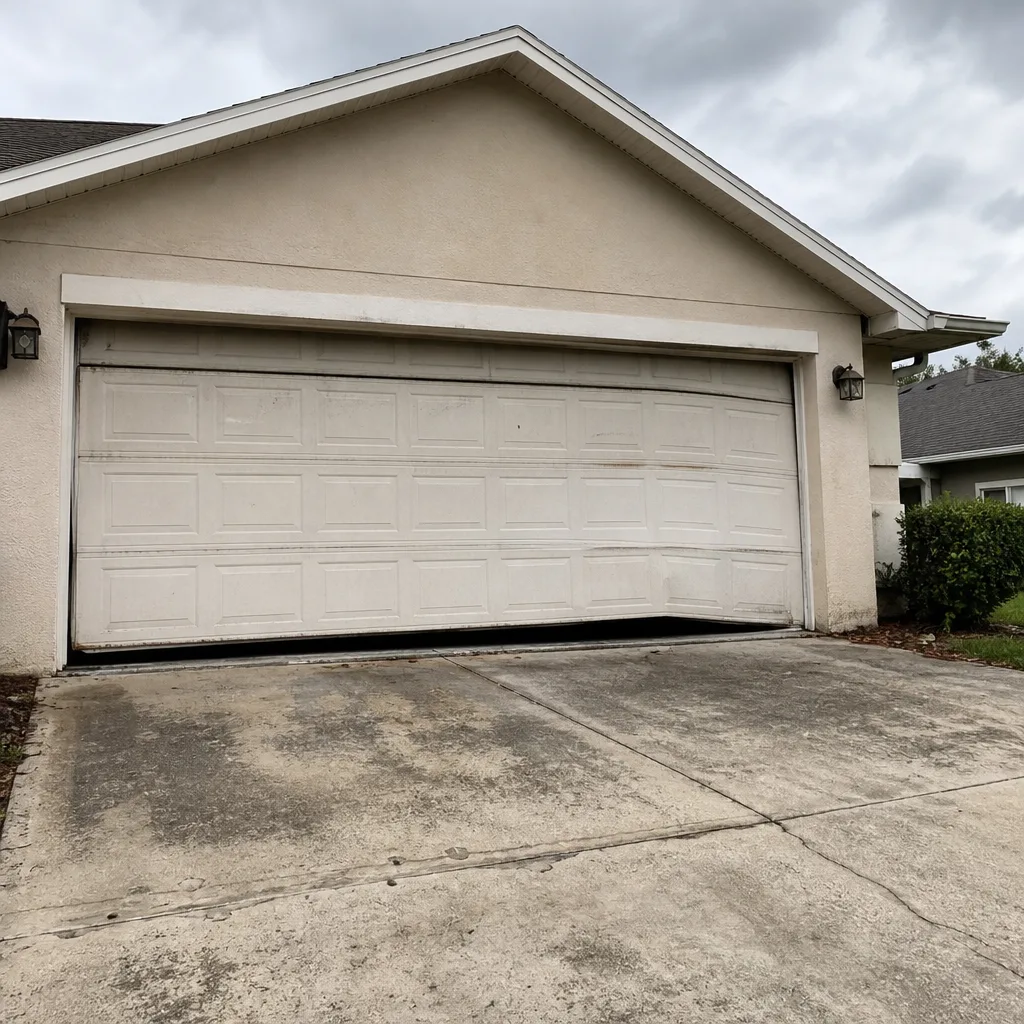 Before
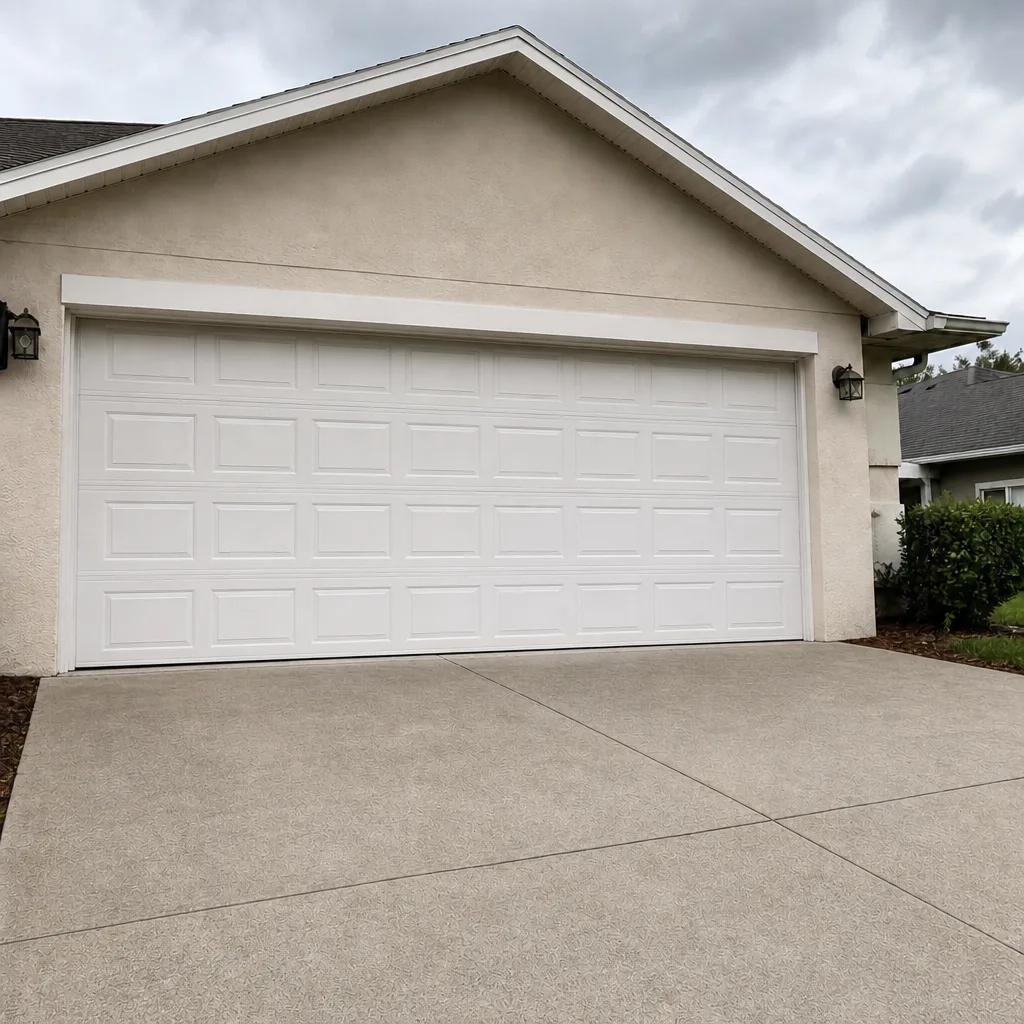 After
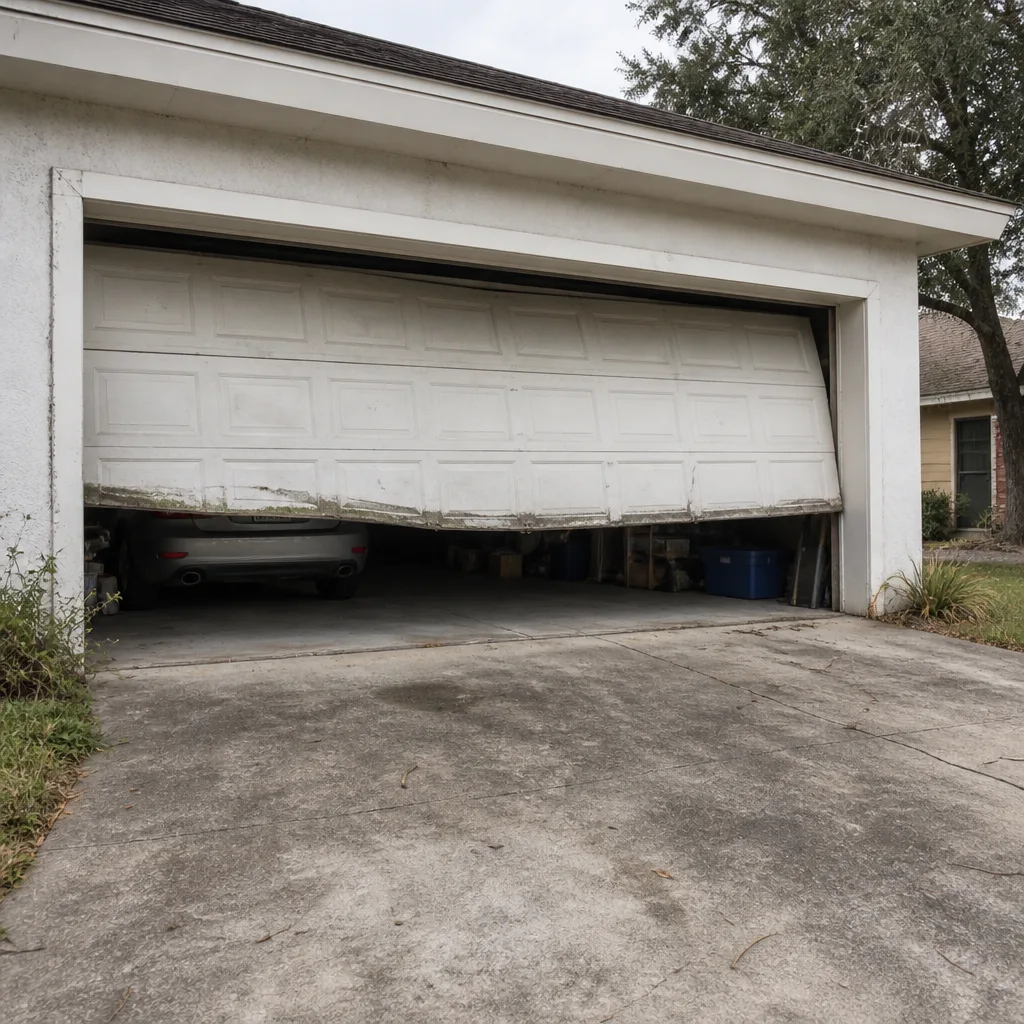 Before
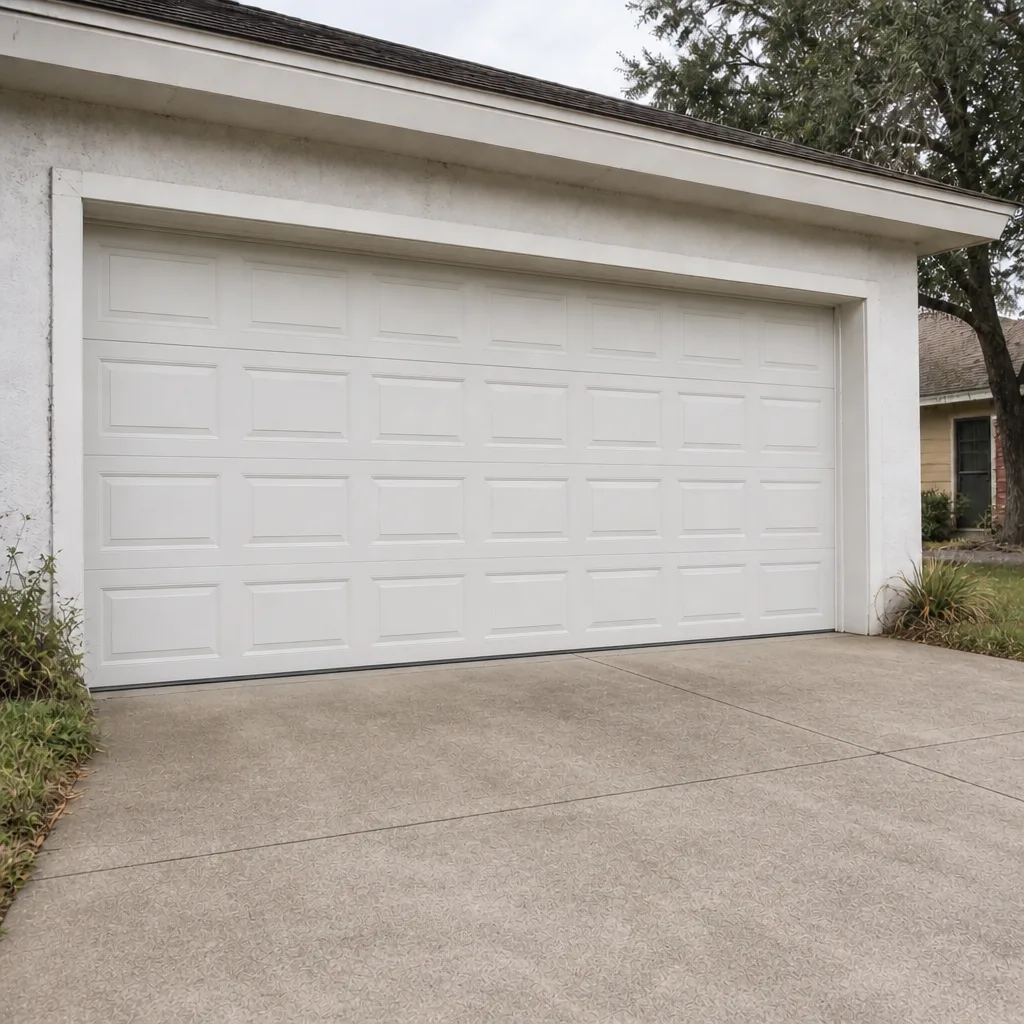 After
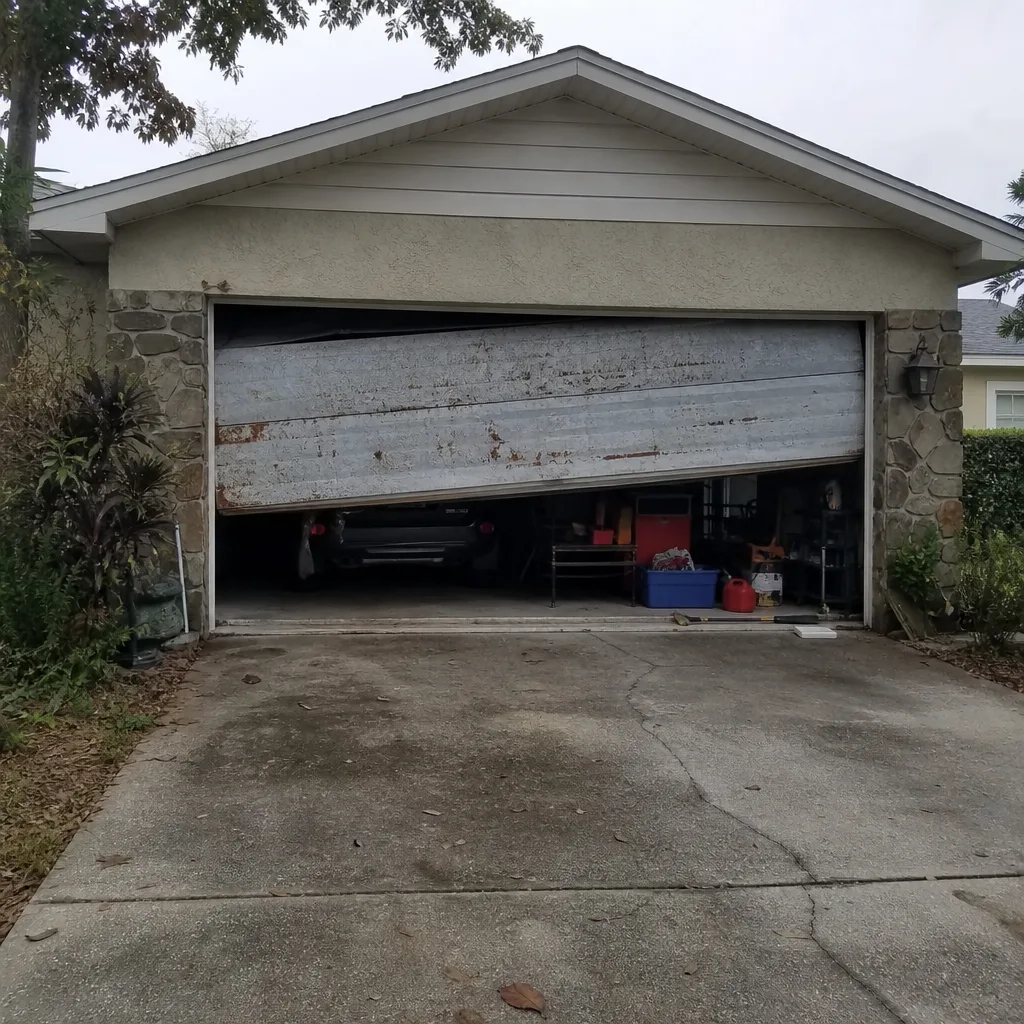 Before
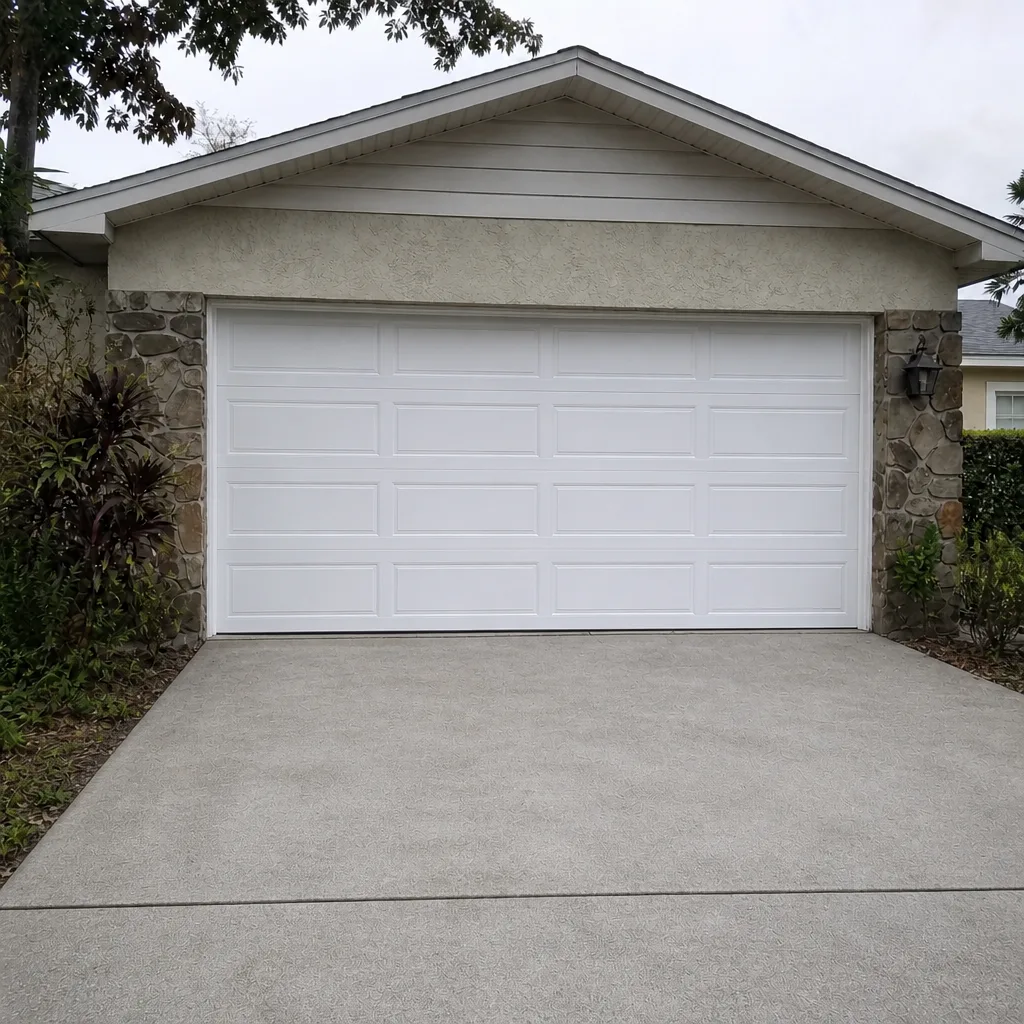 After
When to Call a Professional
Call a professional as soon as you notice any of the following: a door that hesitates, lurches, or makes a new grinding or creaking sound; rust, flaking, or a color change on a spring; a cable that looks frayed, slack, or rusty; an opener that slows or stalls in the afternoon heat, rattles from the head unit, or needs two presses on the remote; daylight or a draft at the bottom of the door; a bottom section that bows or a corner that clears the floor. These are all signs the door needs a specialist’s eye. On springs and cables, don’t wait and don’t touch. Garage Door Repair New Tampa offers free estimates in New Tampa. Call (844) 443-4770 and we’ll take a look.
Frequently Asked Questions
The most common in New Tampa are rust and creaking on the springs, an opener that strains in the afternoon heat, a bottom seal that gaps or curls, and a bottom panel that bows or leaves daylight at the corners. All are early signs that show up before the door fails. Call (844) 443-4770 for a free estimate if any of them sounds familiar.
Humidity speeds up corrosion on springs, cables, and hinges, and heat puts extra load on opener motors and capacitors. Together, they mean the same door can wear faster in New Tampa than in a dry, mild climate. A spring that would last longer elsewhere can start to corrode and creak in a few seasons here. Call (844) 443-4770 to have a specialist check yours.
You can lubricate one, but it won’t fix corrosion that’s already started. If a spring is creaking because it’s binding or corroding, oil can quiet the sound while the underlying problem gets worse. A spring is under high tension and should be inspected by a specialist, not handled at home. Call (844) 443-4770 for a free estimate.
Look, don’t touch. Use a flashlight and check for frayed strands, slack, rust, or a cable that’s out of its drum or pulley groove. If you see any of those, step back and call a professional, because a damaged cable can snap without warning. Call (844) 443-4770.
It usually means the motor is working harder than it should, often because of a worn capacitor, gear, or a door that’s not moving freely. Heat makes an already-strained opener worse, so afternoon-only symptoms are a real warning. Have it checked before it fails. Call (844) 443-4770 for a free estimate.
A quick visual and listening check four times a year is a good habit, especially at the start and end of the humid season. A professional inspection is worth doing whenever you notice a new sound, a hesitation, rust, or a gap. Call (844) 443-4770 if you’d rather have a specialist look now.
The Bottom Line
The warning signs that matter most in New Tampa are the quiet ones: a rusting spring, a straining opener, a gapping seal, a bowing bottom panel, a fraying cable. They appear months before the door actually fails, and they’re much cheaper to address early. Check the list in this guide a few times a year, look but never touch the springs and cables, and call a garage door specialist as soon as something changes. From a broken spring to a brand-new door, one call covers it, and our technicians have up to 8 years of experience with the brands on your door.
Call (844) 443-4770 for a free estimate, and we’ll help you decide what’s worth fixing now and what can wait.
Written by the team at Garage Door Repair New Tampa.